
Chaos with a Plan
Jan 18, 2026
Why Process Matters More Than Product in My Work
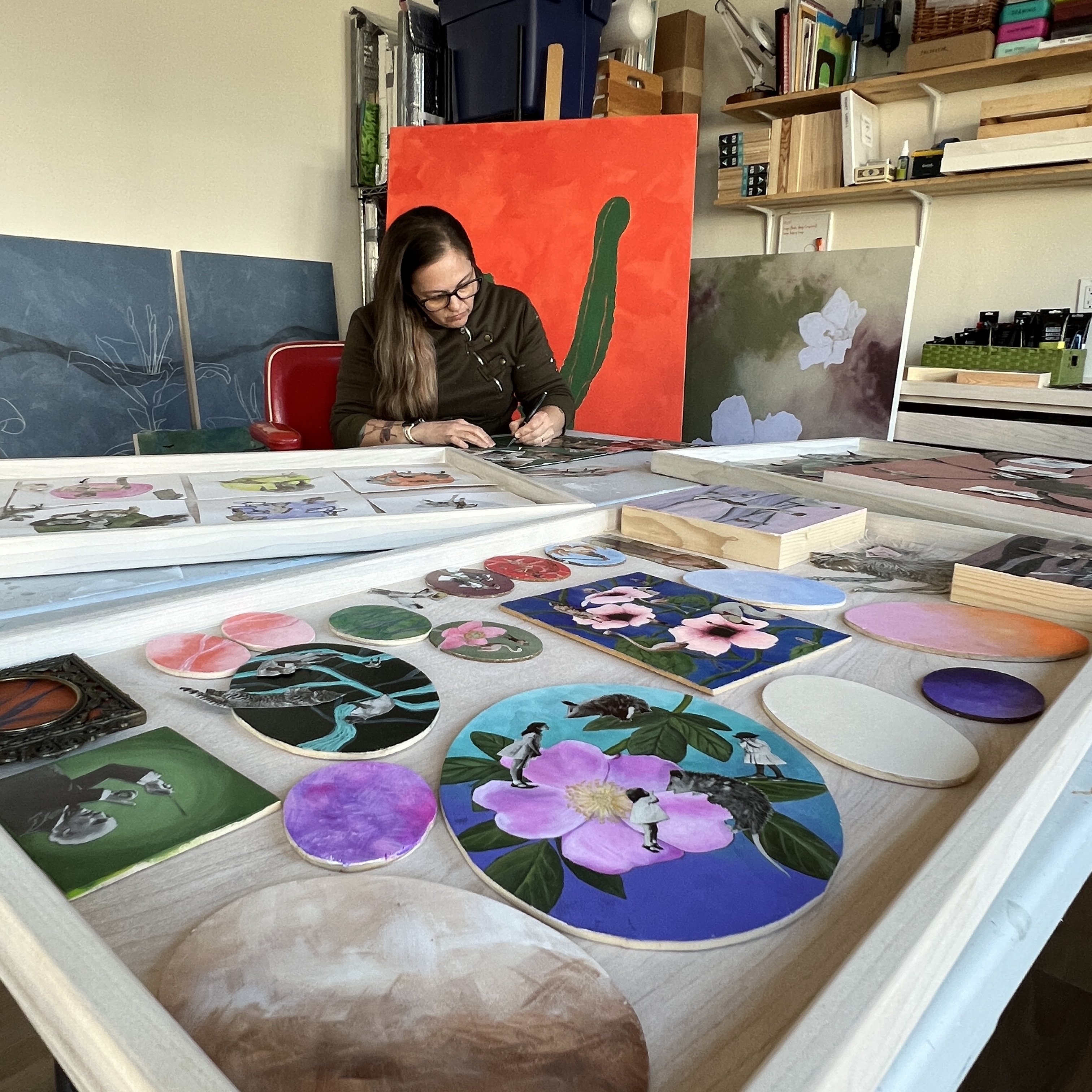
People often assume I start my work with a clear image in mind. A sketch. A plan. An outcome I’m working toward.
I don’t.
What I usually have is a table covered in fragments, a vague sense of curiosity, and the willingness to sit with uncertainty longer than feels comfortable.
My process is less about executing an idea and more about discovering one.
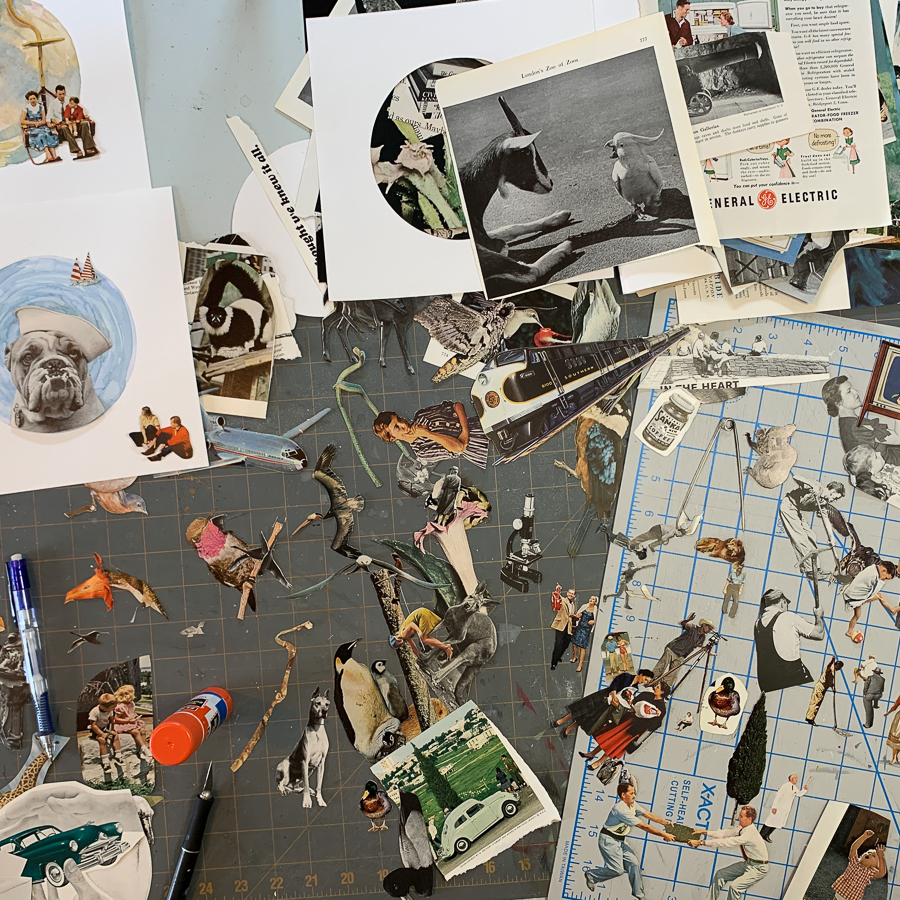
I often describe it as “chaos with a plan.” The chaos is real: piles of vintage magazine cutouts, painted backgrounds that could go in any direction, moments where nothing seems to fit. The plan is quieter. It lives in years of looking, editing, noticing relationships, and trusting that meaning will emerge through attention rather than force.
I typically begin with one anchor element. Not because it explains the piece, but because it creates a starting point. From there, everything is relational. I pay attention to tone, balance, spatial rhythm, and especially the gaze of the figures. Where are they looking? What are they ignoring? Who appears connected, and who feels isolated?
These decisions aren’t logical in the traditional sense. They’re felt. And they often arrive slowly.
This is where discomfort shows up.
There’s a moment in almost every piece where I don’t know what comes next. The temptation is to resolve that tension quickly, to make something “work” just to escape the unease. But I’ve learned that the most interesting relationships, the ones that create humor, tension, or quiet absurdity, only reveal themselves if I wait.
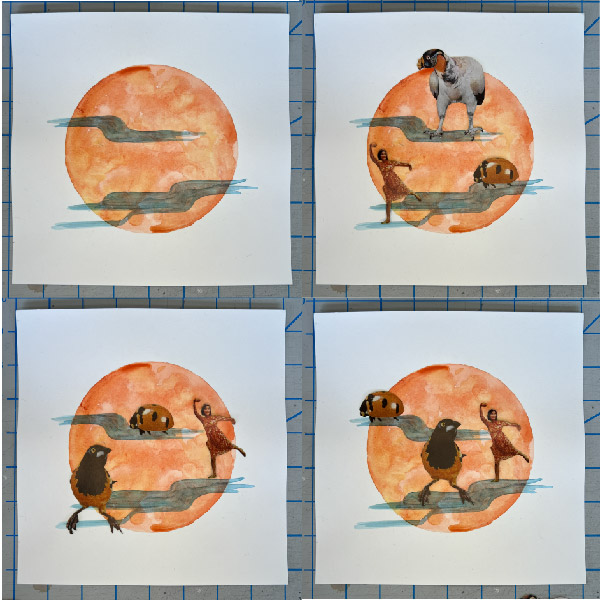
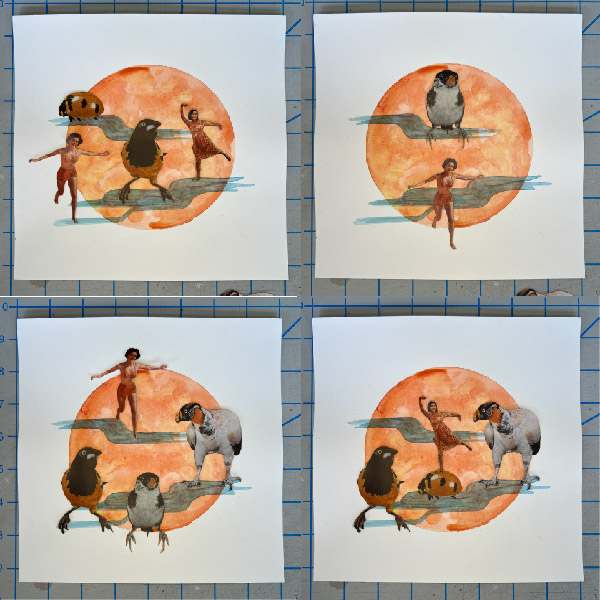
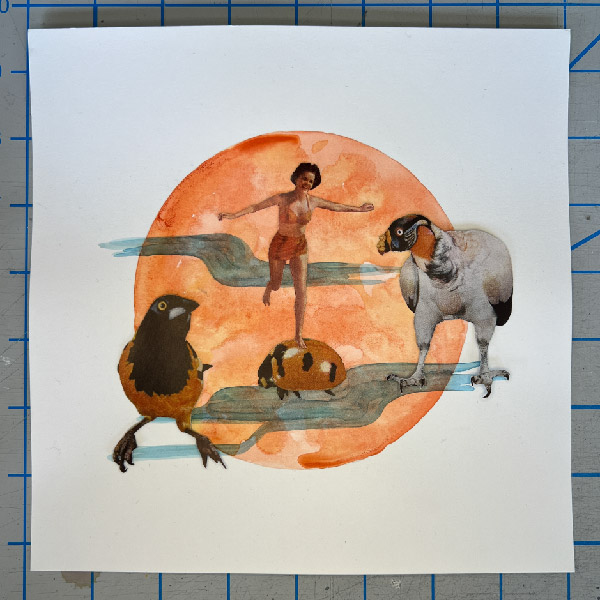
I think of it as the thrill of a pictureless puzzle.
The image doesn’t exist yet. The satisfaction comes from staying present long enough for it to assemble itself.
Mid-century imagery plays an important role here. These images were created to feel resolved, aspirational, and complete. When I place them into new contexts, I’m not trying to mock them or romanticize them. I’m interested in what happens when certainty is interrupted. When idealized symbols of home, family, gender, or success are asked to coexist with something unexpected.
That friction is where meaning lives.
Process-first work allows space for surprise. It invites humor without forcing a punchline. It creates room for viewers to bring their own interpretations rather than being told what to see or feel.
It also mirrors how I move through the world.
So much of contemporary culture pushes us toward outcomes: productivity, clarity, optimization. But art offers a different model. One where uncertainty isn’t a failure state, but an essential ingredient. One where paying attention is more valuable than arriving quickly.
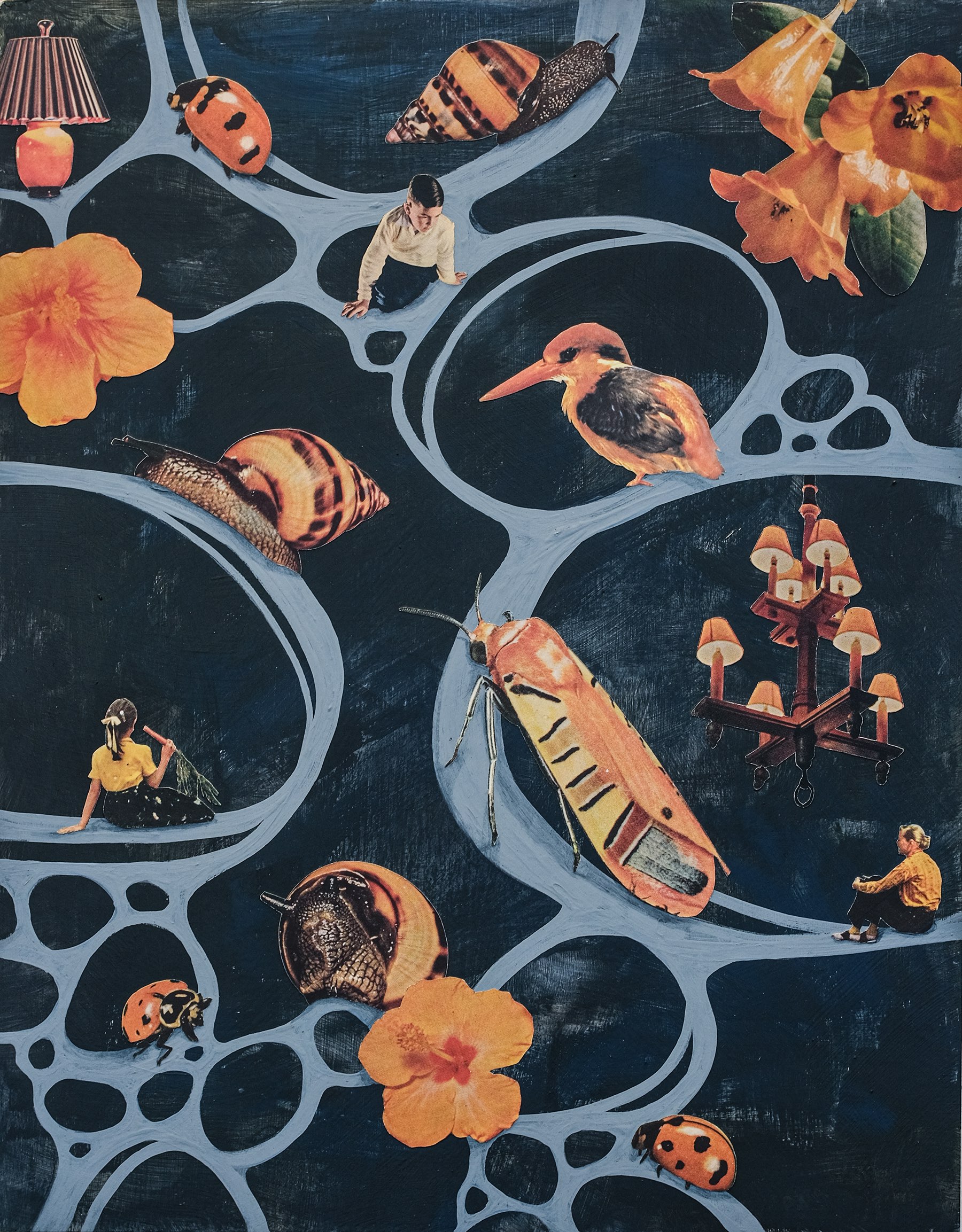
When people tell me my work feels playful, tense, or quietly strange, I take that as a compliment. Those qualities aren’t added at the end. They’re built slowly, decision by decision, through a process that honors curiosity over control.
In the studio, as in life, I’m less interested in perfect answers than in meaningful relationships.
And those only reveal themselves if you’re willing to stay with the mess long enough for something unexpected to appear.